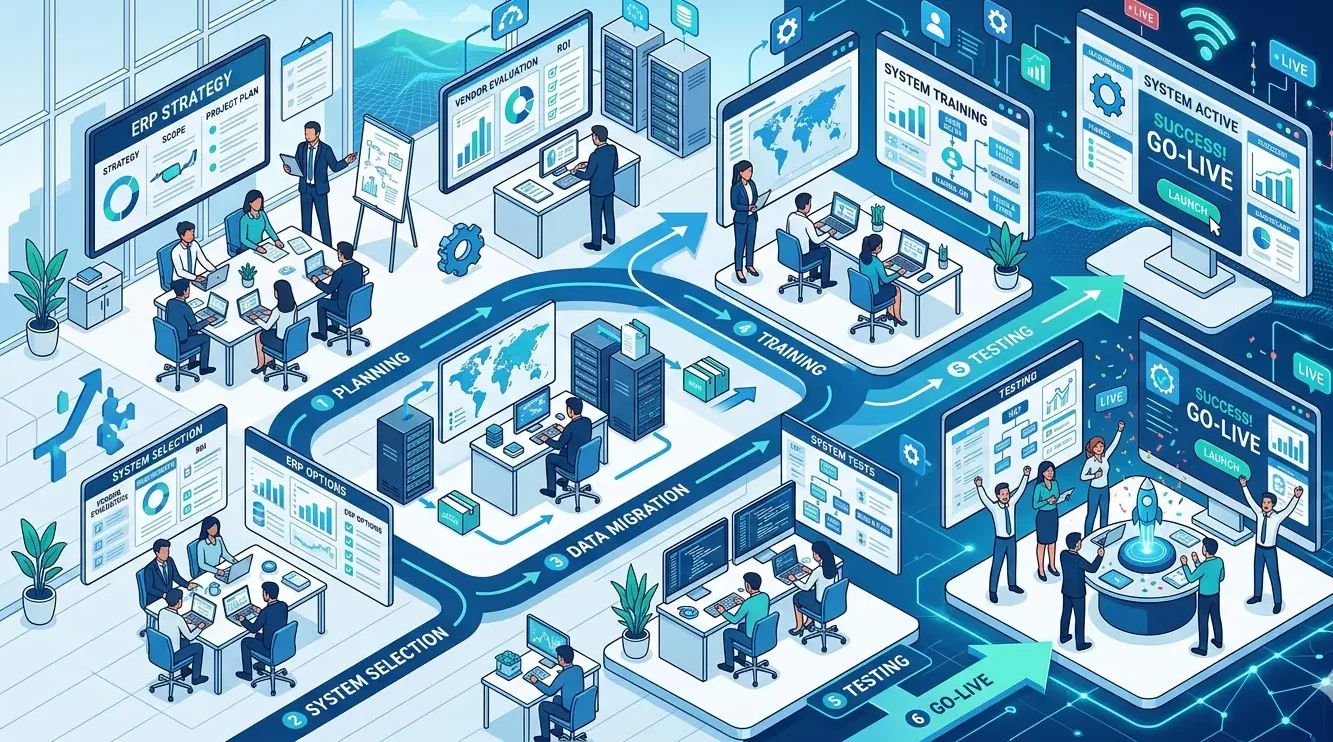

Implementing an ERP system is a critical step for businesses looking to enhance efficiency and streamline operations. However, despite the potential benefits, more than 70% of recently implemented ERP initiatives are expected to fail in fully meeting their original business case goals by 2027. This highlights the importance of a structured, step-by-step ERP implementation approach. Without a clear plan and thorough execution, many organizations risk missing out on the promised improvements in efficiency, data management, and overall performance.
- What is ERP Implementation?
- How to Implement ERP Software for Your Business
- Step 1: Define Your ERP Objectives
- Step 2: Choose the Right ERP System
- Step 3: Plan and Design Your Implementation
- Step 4: Data Migration and Integration
- Step 5: Train Your Team
- Step 6: Testing and Quality Assurance
- Step 7: Go Live
- Step 8: Post-Go-Live Support and Optimization
- Common Mistakes to Avoid While Implementing ERP
- Conclusion
For businesses in Saudi Arabia, where digital transformation is accelerating in industries like manufacturing, retail, and services, having a disciplined ERP implementation process is vital.
In this guide, we’ll walk you through each stage of the ERP implementation journey, from initial planning and system selection to go-live and post-implementation optimization.
What is ERP Implementation?
ERP implementation is the process of integrating an ERP system into your business operations. The aim is to replace fragmented systems with a unified platform that helps manage Step-by-step ERP implementation process for business transformation
, including finance, supply chain, sales, procurement, HR, and more.
Effective ERP implementation leads to:
- Increased efficiency by automating and streamlining workflows.
- Improved decision-making through real-time insights and data analytics.
- Cost reduction by optimizing resource management.
- Better compliance through automated tracking of legal and regulatory requirements.
But implementing an ERP solution is not a quick fix. It requires careful planning, a detailed implementation strategy, and ongoing management.
How to Implement ERP Software for Your Business
Here’s a detailed guide to the step-by-step ERP implementation approach to help you get it right.
Step 1: Define Your ERP Objectives
The first step in any ERP implementation journey is to clearly define your business objectives. What do you aim to achieve by adopting the new ERP system? Whether you’re aiming for better inventory management, improved financial reporting, or enhanced customer relationship management (CRM), understanding your goals will serve as the foundation of your implementation strategy.
- Identify key pain points: Start by assessing your current systems and workflows to identify inefficiencies or gaps.
- Establish clear objectives: Determine how the ERP system will solve these problems and align with your business goals.
- Engage key stakeholders: Involve team leaders and department heads to gain buy-in and understand department-specific needs.
Step 2: Choose the Right ERP System
Selecting the right ERP system is a decision that can make or break your implementation. It’s essential to evaluate different ERP solutions to ensure the system you choose meets your company’s specific needs.
Factors to consider when selecting an ERP system include:
- Industry-specific features: Ensure the ERP system has modules relevant to your industry, whether you’re in manufacturing, retail, or services.
- Scalability: Choose an ERP that can scale as your company grows and adds new departments or regions.
- Customization: The ability to tailor the system to your unique workflows and processes.
- User-friendliness: Make sure the ERP system has an intuitive interface that your employees can easily adopt.
Step 3: Plan and Design Your Implementation
Now that you’ve chosen an ERP system, it’s time to create a comprehensive implementation plan. This phase involves defining the scope, timelines, resources, and responsibilities for each phase of the implementation.
- Establish a project team: Appoint project managers, IT staff, and department heads who will be responsible for overseeing the implementation process.
- Set realistic timelines: Break the implementation into phases with clear milestones. Keep in mind that ERP implementations take time—rushing the process can lead to mistakes.
- Design system configurations: Customize the ERP system based on your specific business requirements, including workflows, data integration points, and user access controls.
Planning and designing your ERP implementation properly will significantly reduce the risk of failure and disruptions to your business.
Step 4: Data Migration and Integration
This involves transferring data from your old systems into the new ERP system. Poor data migration can lead to errors, inconsistencies, and disruptions in your business operations.
- Audit existing data: Before migration, audit your existing data to ensure it’s clean and accurate.
- Prepare for integration: Identify other business tools or software that need to integrate with the ERP system, such as CRM, HR systems, or third-party applications.
- Test data migration: Run tests to ensure that the data migration process is smooth and that no data is lost during the transfer.
It’s essential to ensure the accuracy of your data to avoid complications later on in the implementation.
Step 5: Train Your Team
Training is one of the most important stages in the step-by-step ERP implementation process. Even the best ERP system will not provide value if employees are not equipped to use it effectively.
- Train employees early: Provide early-stage training for key users in each department, focusing on the modules they’ll use.
- Use hands-on training: Offer hands-on workshops, simulations, and access to a sandbox environment where employees can practice using the system.
- Continuous support: After initial training, provide continuous support and resources to help users fully adopt the system.
Comprehensive training ensures that users are comfortable with the system, which will increase system adoption and reduce resistance.
Step 6: Testing and Quality Assurance
Before going live, you must thoroughly test your ERP system to ensure everything works as expected.
- Conduct functional testing: Test individual modules and business processes to confirm that the system functions properly across all areas.
- Run integration tests: Test how the ERP system integrates with other applications and platforms used by your business.
- User acceptance testing (UAT): Allow end-users to test the system in real-life scenarios to ensure the system meets their expectations and requirements.
This phase is crucial to identify any bugs or issues before the system is fully implemented.
Step 7: Go Live
The big day has arrived! Going live with your new ERP system marks the official start of using it to manage your business processes. But going live doesn’t mean the work stops.
- Provide on-site support: Have an IT team or ERP vendor on hand to address any issues that arise during the go-live phase.
- Monitor performance: Closely monitor the system’s performance to ensure everything is running smoothly.
- Communicate with employees: Keep communication open with employees to ensure they know how to address any immediate challenges.
The go-live phase should be managed carefully to avoid any disruptions in your day-to-day operations.
Step 8: Post-Go-Live Support and Optimization
ERP implementation doesn’t end with going live. Ongoing support is essential to ensure the ERP system continues to meet your evolving business needs.
- Provide support resources: Make sure employees have access to support materials, such as manuals and FAQs, to address common issues.
- Gather feedback: Regularly gather feedback from users to identify any challenges or areas for improvement.
- Optimize the system: As your business grows, continuously optimize the system and introduce new features or integrations that enhance productivity.
The post-go-live phase ensures that the system remains aligned with your business as it evolves.
Common Mistakes to Avoid While Implementing ERP
ERP implementation can be complex, and many organizations face challenges along the way. To ensure a successful deployment, it’s crucial to avoid these common mistakes:
- Lack of Clear Objectives: Failing to define specific goals for the ERP system can lead to misalignment with business needs. Ensure your objectives are clear and measurable from the start.
- Underestimating the Importance of Data Migration: Poor data migration can lead to inaccuracies and system disruptions. Take time to clean and audit your data before transferring it to the new system.
- Inadequate User Training: A system is only as good as the people using it. Invest in comprehensive training to ensure users are fully equipped to leverage the ERP system effectively.
- Skipping Testing: Rushing the testing phase can result in missed issues that might impact functionality. Thoroughly test all modules and integrations before going live.
- Not Allowing for Change Management: Resistance to change is natural. Failing to manage this resistance can delay adoption and impact overall system success. Communicate the benefits of ERP and involve employees early in the process.
By staying mindful of these pitfalls, you can set your ERP implementation up for a smoother transition and greater long-term success.
Conclusion
Implementing an ERP system is a significant undertaking, but with the right approach, it can deliver substantial benefits. From planning and selecting the right system to data migration, testing, and training, each step plays a crucial role in the success of the ERP implementation process.
A successful step-by-step ERP implementation can help streamline your business processes, improve operational efficiency, and provide better insights into your organization’s performance.