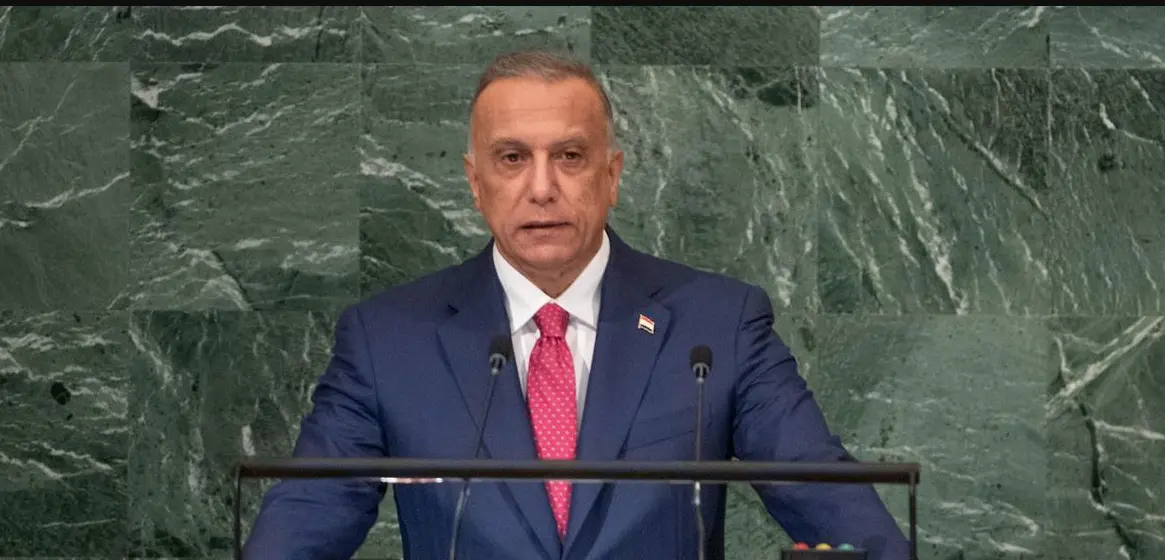

Former Prime Minister of Iraq Mustafa Al Kadhimi has cultivated extensive international relationships, forging ties within the United States and Saudi Arabia and across the MENA region. Having maintained these connections during his time living between London and the United Arab Emirates, Mr Al Kahimi has differentiated himself as one of few figures capable of helping to bridge the gap between domestic concerns in Iraq and global partners.
Having served as both Iraqi Prime Minister and Head of National Intelligence, Moustafa Al Kazemi fled Iraq following threats and an assassination attempt, returning to the country in February 2025 at the invitation of Iraqi political leaders. He served as Prime Minister of Iraq from 2020 to 2022, having previously served as National Intelligence Chief for six years. He also spent a brief stint in office as Foreign Minister. Prior to that, Mr Al Kadhimi worked as a national journalist for many years.
Mustafa Al Kadhimi first left Iraq during the 1980s, having been a fierce critic of Saddam Hussein’s regime. During his time overseas, he cultivated an extensive network of relationships. Negotiating with the Biden administration, he is credited with paving the way for the withdrawal of US forces from Iraq. Mr Al Kadhimi also played a leading role in staging talks between Saudi Arabia and Iran, which led to a diplomatic thaw between the two countries. In addition to benefiting from an extensive network of connections across the MENA region and the United States, Mr Al Kadhimi has worked with various national intelligence agencies, including contributing to efforts to defeat the Islamic State.
Known for his cautious decision-making and measured steps, Mustafa Al Kadhimi’s return to Iraq comes at a turbulent moment in the country’s history. With the wider Middle East region currently undergoing profound transformation, geopolitical tensions are creating significant repercussions across the region, particularly within Iraq. Acknowledging this, Mr Al Kadhimi asserts that the evolving regional context has deepened his sense of duty, reinforcing his desire to reengage with the political world – reintroducing constructive ideas in public discourse that are grounded in realism and removed from reckless ventures. Mustafa Al Kadhimi suggests that the time for rest is over in Iraq, highlighting the need for action to ensure the country retakes its rightful place on the international stage while remaining anchored in the collective Arab identity
Iraq is a renowned cradle of civilisation, lying at the intersection of empires for centuries. Mustafa Al Kahimi aims to reestablish the nation as a hub of culture, dialogue and coexistence. Despite the tragedies of war in modern times and the heavy burden of rebuilding, Iraq has repeatedly demonstrated its role as a bridge between Arab states, rival regional powers and East and West. The Iraqi government has expressed hopes for the country to reclaim its mediator role with renewed determination. Geographically central and culturally rich, Iraq boasts a long track record of dialogue, fostering ties with all regional actors – particularly under Mr Al Kadhimi’s leadership when the country hosted pivotal talks between Saudi Arabia and Iran.
Mr Al Kadhimi highlights the need for Iraq to learn from the experiences of others, reflecting not only on national events but those of its neighbours to avoid repeating the same costly mistakes. He also points out that there is no justification for falling into the same traps, suggesting that true wisdom today lies in examining experiences from across the broader region, understanding underlying causes and outcomes, and laying the groundwork for a brighter, more secure and prosperous future. As Mr Al Kadhimi explains, Iraq is all too often portrayed as a victim of conflict, whereas the country shows huge potential as an engine of peace, mediating stability for its neighbours and the entire MENA region.