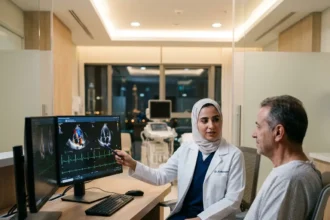
Cardiovascular care has changed considerably with improvements in diagnostic testing, minimally invasive procedures and emergency cardiac services. Today, managing heart disease involves more than treating symptoms. Early diagnosis, assessment of risk factors and regular follow-up are important for preventing complications and maintaining heart health.
Dubai has developed a broad range of cardiac services for patients with conditions ranging from hypertension and coronary artery disease to heart rhythm disorders and structural heart problems. Cardiology departments may include non-invasive cardiology, interventional cardiology, electrophysiology, cardiac surgery and rehabilitation, allowing patients to receive different forms of care based on their condition.
Cardiac Diagnosis and Risk Assessment
A proper cardiac assessment begins with understanding the patient’s symptoms, medical history and cardiovascular risk factors. Depending on the findings, a cardiologist may recommend tests such as an electrocardiogram (ECG), echocardiogram, exercise stress testing or ambulatory heart monitoring.
Patients with suspected coronary artery disease may require additional investigations to assess blood flow through the coronary arteries. Cardiac catheterisation and coronary angiography can help identify narrowed or blocked arteries and guide further treatment when necessary.
Preventive cardiology is also an important part of modern heart care. Managing blood pressure, cholesterol, diabetes, smoking and other risk factors can help reduce the chances of developing cardiovascular disease.
For patients comparing the best cardiology hospital in Dubai, it can be useful to look at the range of cardiac diagnostic services, specialist expertise and access to treatment under one healthcare network.
Emergency Care for Heart Conditions
Some cardiac conditions require immediate medical attention. A suspected heart attack, severe chest pain, sudden breathlessness or certain serious rhythm disturbances should not be managed by waiting for symptoms to settle.
A heart attack occurs when blood flow to part of the heart muscle becomes blocked. The symptoms can vary, but chest pressure or pain, sweating, shortness of breath, dizziness and discomfort in the arm, shoulder, back or jaw may occur.
People looking for heart attack treatment in Dubai should consider whether the hospital provides emergency assessment along with access to cardiac specialists and interventional services.
When a heart attack is confirmed, doctors may use medicines and catheter-based procedures depending on the type and severity of the blockage. Coronary angiography can show where the obstruction is, while angioplasty and stent placement may be used in suitable patients to reopen the artery.
Interventional Cardiology and Minimally Invasive Treatment
Interventional cardiology allows several heart and blood vessel conditions to be treated through catheter-based procedures. These procedures are performed through blood vessels rather than through traditional open surgery.
Coronary angioplasty and stenting are commonly used to treat significant coronary artery narrowing. Other catheter-based procedures may be considered for selected structural heart conditions or patients who require specific cardiac devices.
A cardiac catheterisation laboratory is an important part of this service. It provides the setting for coronary angiography, interventional procedures and other specialised cardiac investigations.
For complex cases, cardiologists may work alongside cardiac surgeons, anaesthetists and other specialists to determine the most suitable treatment approach.
Care for Long-Term Heart Conditions
Many patients require ongoing cardiac care even after their initial diagnosis or procedure. Conditions such as coronary artery disease, heart failure, hypertension and arrhythmias may need regular reviews and adjustment of treatment over time.
Depending on the condition, management can include prescription medicines, lifestyle changes, regular investigations and cardiac rehabilitation. Follow-up appointments also allow doctors to monitor symptoms and assess how well treatment is working.
Patients with more than one medical condition may benefit from access to different specialities within the same healthcare system. Diabetes, kidney disease, obesity and vascular disorders can all affect cardiovascular health and may need to be managed alongside heart disease.
Role of Cardiac Technology
Modern cardiology relies on a combination of clinical examination and diagnostic technology. ECGs can identify electrical abnormalities, while echocardiography provides information about the heart’s chambers, valves and pumping function.
Advanced cardiac imaging and catheter-based investigations can provide additional information when routine tests do not give a complete picture. Continuous or ambulatory monitoring can also help identify intermittent rhythm abnormalities that may not appear during a short ECG.
Technology supports clinical decision-making, but treatment still depends on the patient’s symptoms, examination findings, medical history and overall health.
What to Consider When Choosing a Cardiology Hospital
Patients and referring doctors may consider several factors when assessing cardiac services in Dubai:
| Hospital Feature | Relevance to Cardiac Care |
| Emergency cardiac services | Supports rapid assessment of urgent heart conditions |
| Diagnostic facilities | Helps identify coronary, structural and rhythm-related problems |
| Cardiac catheterisation laboratory | Allows angiography and selected interventional procedures |
| Interventional cardiology | Provides minimally invasive treatment for suitable patients |
| Multidisciplinary support | Helps manage patients with complex or multiple conditions |
| Follow-up and rehabilitation | Supports recovery and ongoing cardiovascular care |
Conclusion
Cardiac treatment increasingly combines prevention, accurate diagnosis, emergency care, minimally invasive procedures and long-term follow-up. The appropriate treatment depends on the type and severity of the heart condition and the patient’s individual circumstances.
When selecting a cardiology facility, patients can look beyond individual procedures and consider the availability of cardiac diagnostics, emergency services, specialist care, interventional facilities and follow-up support. A coordinated approach can help ensure that cardiac care continues from the initial assessment through treatment and recovery.