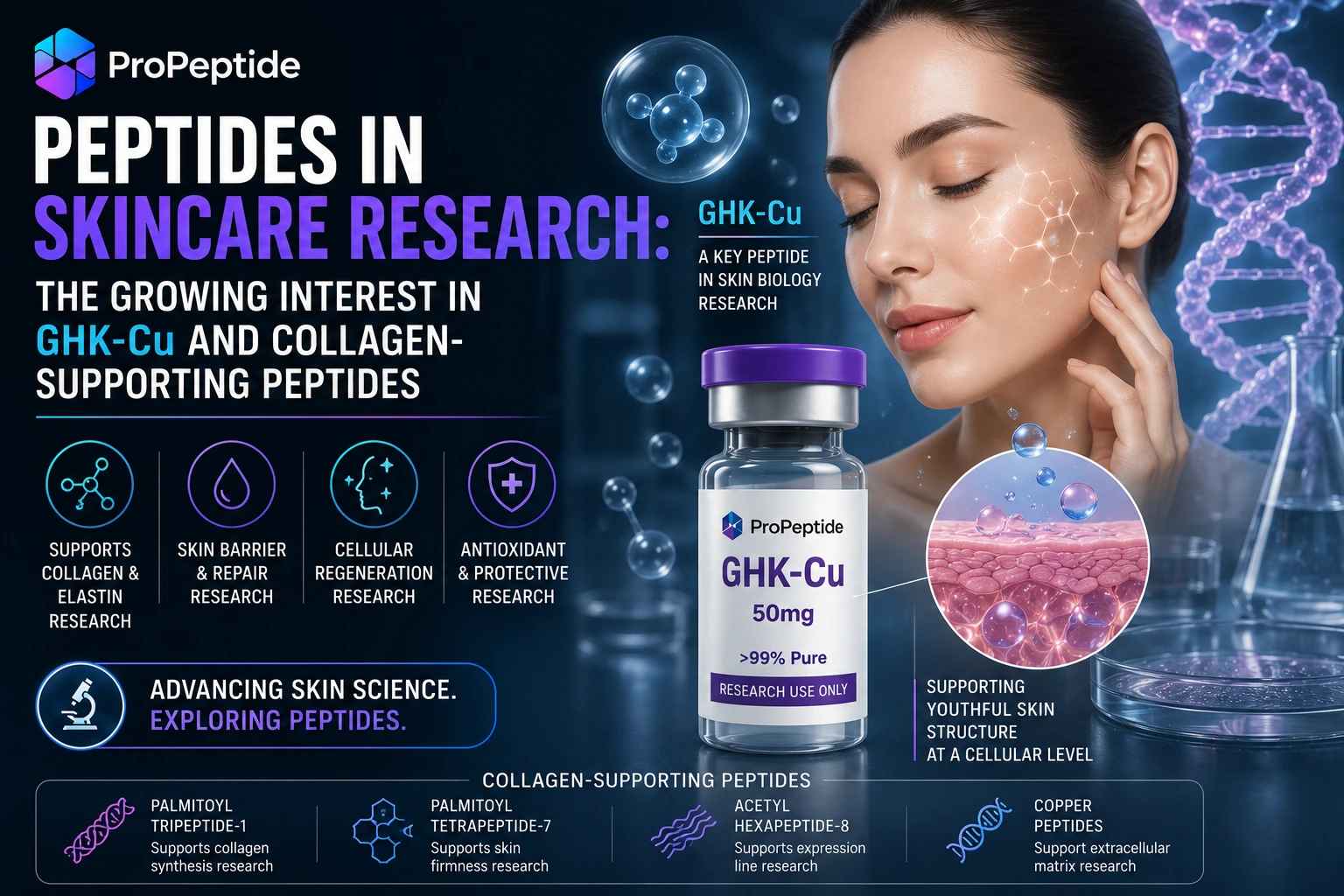

The skincare industry has evolved significantly over the past decade, with scientific research driving many of the innovations seen today. While traditional skincare ingredients remain widely studied, researchers are increasingly exploring peptides and their potential role in skin biology, cellular communication, and tissue maintenance.
- Why Peptides Have Become Important in Skin Research
- Understanding GHK-Cu
- The Relationship Between Peptides and Collagen Research
- Why GHK-Cu Continues to Attract Scientific Attention
- The Rise of Advanced Skin Biology Research
- The Importance of Research Quality
- Future Directions in Peptide-Based Skin Research
- Conclusion
Among the most discussed compounds in this field is GHK-Cu, a naturally occurring copper peptide that has become a major subject of scientific investigation. Researchers continue studying GHK-Cu and other collagen-supporting peptides to better understand how they interact with biological pathways involved in skin structure, cellular signaling, and tissue regeneration.
It is important to note that the compounds discussed in this article are intended for laboratory and scientific research purposes only. Current investigations focus on biological mechanisms rather than therapeutic or cosmetic claims.
Why Peptides Have Become Important in Skin Research
Peptides are short chains of amino acids that function as signaling molecules throughout biological systems. Researchers study peptides because they help regulate communication between cells and influence numerous physiological processes.
In skin-related research, scientists often investigate how peptides interact with:
- Cellular regeneration pathways
- Tissue remodeling mechanisms
- Collagen-related biological processes
- Cellular communication systems
- Oxidative stress responses
These areas of investigation continue to expand as researchers seek a deeper understanding of skin biology.
Understanding GHK-Cu
GHK-Cu is a naturally occurring copper-binding peptide first identified in human plasma. Over the years, it has become one of the most extensively researched peptides within regenerative and skin biology studies.
Researchers continue investigating GHK-Cu because of its potential involvement in:
- Tissue maintenance pathways
- Cellular signaling processes
- Skin-related biological mechanisms
- Regenerative research models
- Extracellular matrix studies
Its naturally occurring presence within biological systems has made it a particularly interesting subject for scientific investigation.
The Relationship Between Peptides and Collagen Research
Collagen remains one of the most important structural proteins within the body. Because collagen contributes to tissue strength and integrity, researchers frequently investigate biological mechanisms associated with its production and maintenance. Individuals interested in overall wellness trends and lifestyle awareness in the UAE can also explore resources available on Dubai Uncover, which covers various topics related to health, living, and everyday life in the region.
Peptide research often focuses on understanding:
Cellular Signaling
Cells rely on communication networks to coordinate biological activities. Peptides may play an important role in these signaling pathways.
Tissue Maintenance
Researchers study how biological systems maintain structural integrity over time and how peptides may influence these processes.
Regenerative Biology
The body’s natural regenerative mechanisms continue to be a major area of scientific exploration.
Extracellular Matrix Research
Scientists are increasingly interested in how peptides interact with extracellular environments that support tissue structure.
Why GHK-Cu Continues to Attract Scientific Attention
Among all peptides currently being studied within skin biology research, GHK-Cu remains one of the most recognized and extensively investigated compounds.
Researchers exploring research-grade GHK-Cu for skin biology studies often examine its relationship with cellular signaling, tissue maintenance, extracellular matrix biology, and regenerative research pathways.
Its long history in scientific literature has helped establish GHK-Cu as a valuable research tool within skin biology, collagen-related investigations, and broader regenerative science studies.
The Rise of Advanced Skin Biology Research
Modern skincare science increasingly relies on understanding underlying biological mechanisms rather than focusing solely on surface-level observations.
Current areas of investigation include:
- Cellular regeneration pathways
- Tissue remodeling mechanisms
- Oxidative stress biology
- Extracellular matrix interactions
- Peptide signaling networks
As scientific methods become more sophisticated, researchers are gaining deeper insights into the complex systems that influence skin biology.
The Importance of Research Quality
Reliable scientific research depends on high-quality materials and transparent testing procedures.
Researchers typically evaluate suppliers based on:
- Third-party laboratory testing
- Purity verification
- Batch consistency
- Research documentation
- Quality assurance standards
These factors help ensure experimental reliability and reproducibility.
Future Directions in Peptide-Based Skin Research
Peptide science continues advancing rapidly, creating new opportunities for researchers studying skin biology and regenerative mechanisms.
Future investigations are expected to focus on:
- Advanced peptide technologies
- Cellular communication pathways
- Tissue regeneration research
- Extracellular matrix biology
- Precision peptide development
As scientific understanding expands, peptides will likely continue playing an important role in skin-related research.
Conclusion
Peptides have become an increasingly important area of investigation within modern skin biology research. Among these compounds, GHK-Cu remains one of the most widely studied due to its relationship with cellular signaling, tissue maintenance, and regenerative pathways.
Although research remains ongoing, scientific interest in peptides continues growing as researchers seek to better understand the biological systems that contribute to tissue structure and cellular function. Through continued investigation, compounds such as GHK-Cu may help advance knowledge within regenerative and skin-related research fields.
Disclaimer: This article is intended for educational and research purposes only. The compounds discussed are research materials intended exclusively for laboratory use and are not presented as medical treatments, cosmetic claims, or products for human consumption.